
How to be Authentic? Live with Awareness and Presence
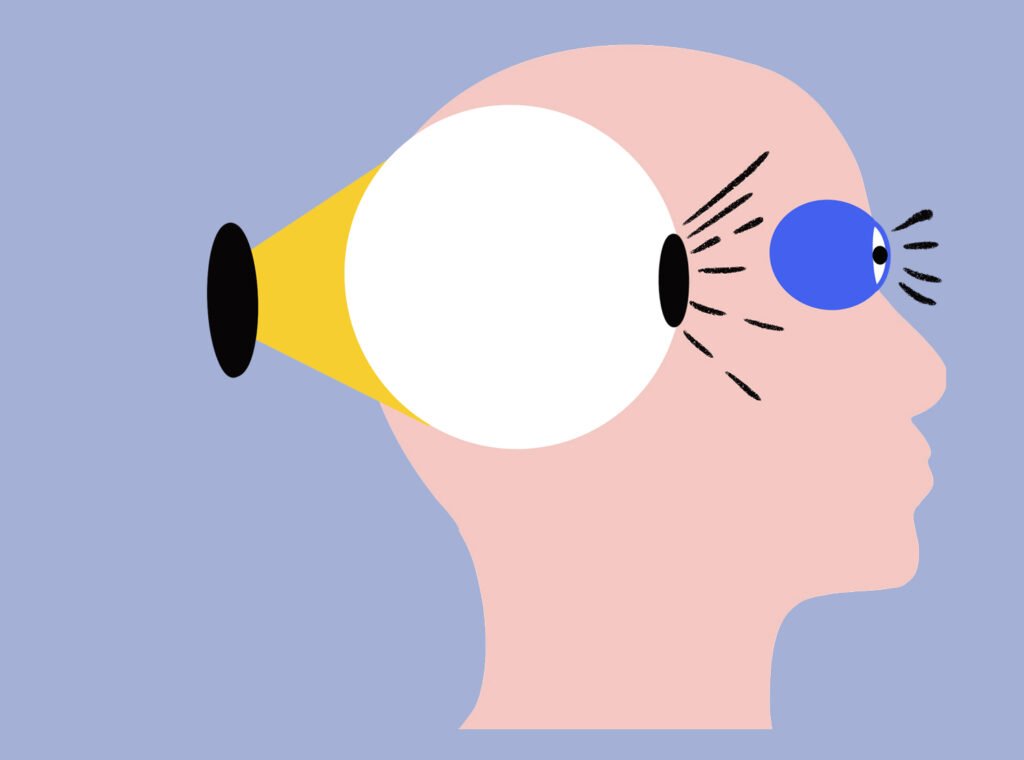
The authentic self is your true identity beyond thoughts, emotions, and social conditioning. It is the awareness that observes your experiences without becoming completely identified with them. Authenticity is the ability to stay connected to what genuinely feels true in the moment instead of shaping yourself entirely around external expectations, fear, or imitation. It also includes the flexibility to move with life naturally, to fully experience a moment when it is present, and to let it go when it changes. Like wearing a piece of clothing when it fits the moment and taking it off when it no longer does.
As Brené Brown describes, authenticity also involves vulnerability; the courage to let yourself be seen even in moments of uncertainty, imperfection, or possible judgment. Authenticity is less about maintaining a perfect image and more about staying connected to yourself as you move through life honestly.
Being authentic does not mean expressing every emotion or thought immediately. It means recognizing the difference between temporary reactions, protective patterns, and what genuinely feels aligned with your deeper self. Many people confuse authenticity with impulsiveness, but authentic living often requires awareness, reflection, and emotional responsibility.
When we begin living more authentically, this inner shift gradually starts affecting many areas of our lives:
- Developing emotional awareness and taking greater responsibility for our patterns, choices, and reactions
- Creating more honest, grounded, and meaningful relationships
- Feeling a stronger sense of purpose, inner peace, and self-worth
- Releasing some of the stress and exhaustion that come from constantly suppressing who we are or maintaining identities that do not feel true to us
If feelings, thoughts, and body are not possessions and everything owned is subject to change, the core self remains to be recognized.
What Is Awareness?
Awareness is the ability to notice what is happening within and around you, as it is. It is what lets you recognize what is truly yours and respond with clarity. Without awareness, we cannot distinguish what is truly ours from what is conditioned.
Life moves through us: joy, grief, excitement, disappointment, loss, stillness, and anxiety. Yet beneath it all, a question quietly persists: Who is the one experiencing all of this? Not what you do or feel, but who is the “you” at the center? This question is not just philosophical; it is crucial for building any honest understanding of authenticity.
Consider something simple: when you say “my thoughts” or “my feelings,” the word my reveals a hidden structure. It implies that there is someone who has these experiences: a self that possesses thoughts and emotions rather than being identical to them. This small grammatical detail points to something ontological: there is an observer within you, distinct from everything it perceives. And yet this observer is not easily intelligible through concepts alone; it must be felt, lived into, discovered through direct experience.
This matters for authenticity because feelings, bodies, and beliefs all change, yet something constant remains. Authenticity begins here: in the alignment between that unchanging awareness and how we live. When these align, we feel real. When misaligned, we sense something is off.
Three Layers of Knowing Yourself
- Awareness means noticing what is present, moment to moment. It is the broad field of perception, the ability to be conscious of our surroundings and inner states.
- Self-awareness goes deeper; the capacity for self-reflection on your own thoughts, emotions, and behaviors. Those who practice self-awareness consistently are more likely to live authentically because they can distinguish genuine values from external pressures.
- Dual awareness is maintaining both perspectives: observing the external world while simultaneously witnessing your internal response. This skill cultivates a deep sense of individuality, a clear sense of what is uniquely yours.
Dr. Dan Siegel describes insight as the core of self-awareness: the capacity to observe your inner processes and respond thoughtfully. Without this self-knowledge, authentic relationships become difficult to sustain. Authentic people tend to create space for others to be more genuine, too.
You are not your thoughts. You are not your emotions. You are the one who observes them.

What Is Authenticity?
Authenticity means living as your real self rather than a version shaped for approval. It reflects a clear alignment between what you feel, what you value, and how you act. Existentialist thinkers explored this deeply. Søren Kierkegaard described becoming a true self as life’s central task.
Jean-Paul Sartre explained bad faith as the avoidance of this responsibility by hiding behind roles and social expectations. A sense of authenticity grows when your actions reflect your inner values. This alignment creates clarity, stability, and a grounded sense of direction often described as integrity.
“When your consciousness moves outward, the mind and world arise. When it moves inward, you realize your source.” — Eckhart Tolle.
When you live in alignment with yourself, something softens. Your mind feels clearer. Decisions come with less struggle. Relationships feel more real, more open. You stop carrying the pressure of maintaining an image, and your energy returns to you. Over time, this builds a quiet sense of trust within yourself. You begin to rely on your own voice. Acting in line with what you truly value creates a steady inner ground, one that doesn’t depend on outside approval
The more you try to look authentic, the more it starts to feel like a performance. Your focus shifts outward, toward how others see you, and something real gets lost along the way. Real authenticity feels simple and steady. It comes from within. It doesn’t need to prove anything—it just shows up as it is.
The 8 C’s of the Authentic Self
- Clarity: a clear mind where intuition leads.
- Calmness: deep-rooted peace even in chaos.
- Compassion: warmth extended to others and yourself.
- Courage: bravery to walk through uncertainty.
- Confidence: grounded trust from genuine self-knowledge, not ego.
- Curiosity: an open, nonjudgmental approach to life.
- Creativity: seeing possibility in every path.
- Connectedness: felt unity with others and existence.
How to Be an Authentic Person?
Maybe the real question is not “How do I become authentic?” because your authentic self already exists within you. The process is more about removing the layers that are covering it. Like peeling an onion, we slowly begin to see the fears, conditioning, survival mechanisms, and beliefs that have created the false self over time.
At the core, there is nothing missing and nothing to force. Authenticity is not something we perform or achieve. It is what naturally appears when we stop trying so hard to be who we think we need to be. We are not becoming someone else. We are allowing what is already within us to surface.
This is also what authentic living begins to feel like. Instead of constantly shaping ourselves around expectations, fear, or external validation, we begin making choices that feel more aligned with our inner truth. Authentic living is not about having a perfect life. It is about creating a deeper connection between who we are inside and how we move through the world.
We still sometimes fall back into fear, tension, or old patterns. But the important part is noticing the resistance that arises and softening it, rather than building another layer on top of ourselves. Every time we do this, the authentic self has more space to reveal itself. Over time, the mind and body begin learning this state more naturally, until authenticity feels less like effort and more like returning to yourself.
True Self & False Self: Unmasking the Authentic Self
Beneath all roles, reactions, and conditioning, the true self / authentic self / higher self emerges with ease and clarity. Presence deepens, awareness expands, and a quiet sense of alignment with what feels real begins to guide experience. In simple moments of awareness, connection to this authentic layer becomes clearer. Thoughts come into view without pulling attention away. Emotions move through with openness. Life unfolds while awareness remains steady in the background, holding it all.
Your false self grows through adaptation. As a child, you begin to shape your behavior in response to your environment. You learn what creates connection, what brings approval, and how to belong. Through this process, you build patterns that help you move through the world. Freud described this inner structure through the id, ego, and superego, showing how instincts, reality, and internalized rules shape behavior. Jung expanded this view by introducing the persona—the version of you that meets the world; and the shadow, the parts you keep out of awareness. He saw growth as individuation, a process of bringing all parts into alignment.
The difference becomes clear when you notice this:
- Your true self observes with awareness
- Your false self moves through learned patterns
And with awareness, you reconnect with a deeper sense of yourself—clear, present, and fully alive.
| Ego Self/ False Self | Authentic Self / True Self / Higher Self |
|---|---|
| Seeks approval and validation | Expresses what genuinely feels true |
| Shaped by fear, conditioning, and survival | Rooted in presence, awareness, and inner truth |
| Performs to fit expectations | Feels natural without forcing |
| Constantly compares itself to others | Feels connected to its own path |
| Acts from control, tension, or protection | Moves with more openness and trust |
| Creates identities to feel safe | Exists beneath labels and roles |
| Reacts automatically from old patterns | Responds with awareness |
| Fears rejection and failure | Accepts imperfection as part of life |
| Depends on external success for worth | Feels worthy beyond achievement |
| Often disconnects the mind and body | Creates alignment between mind, body, and emotions |
| Lives according to “who I should be.” | Moves toward authentic living and the true self |
The path back to Authenticity
- Recognize the mask: notice the moments when you are performing, people-pleasing, or acting out of fear instead of expressing your real feelings and needs. Authenticity begins when you become aware of what feels inauthentic.
- Reconnect with the inner child: many parts of the authentic self were hidden to gain love, safety, or acceptance. Reconnecting with the inner child helps you rediscover the natural qualities that were pushed aside over time.
- Observe without immediately reacting: self-awareness grows when you can witness thoughts, emotions, and old patterns without automatically acting on them. This creates space between you and the conditioning that shaped the false self.
- Ask deeper questions: instead of only asking “Who am I?” begin asking “What remains when I stop identifying with roles, expectations, and fear?” This shifts attention toward the authentic self beneath the layers of identity.
The true self is a compass, a lifelong process of returning through stillness and honesty. As Yunus Emre wrote: “There’s an I within me, deep, deeper than I.”
The Power of Being Both Observer and Actor
Dan Siegel offers a compelling image: we are both protagonist and audience. As the actor, we engage directly. As the observer, we witness without judgment. Living authentically depends on cultivating this dual capacity.
The observer is not detached; it is the quality of presence that keeps us from automatic reaction and allows us to mediate between our values and beliefs and external pressures. It requires courage: the willingness to pause when instinct says react.
“Observation creates the space needed to respond from clarity, rather than compulsion.”
Practicing Dual Awareness in Daily Life
- Notice habitual complaints: Recognizing what is genuinely yours and what is borrowed anxiety is part of authenticity.
- Observe without commentary: Watch thoughts without judgment. Emotional intelligence begins in the quiet space between feeling and reaction.
- Return to the body: Anchor your observer in breath, posture, heartbeat. Create space before responding. The gap between stimulus and response is where authenticity has room to breathe.
It takes courage to remain an observer when life is loud. Balancing actor and observer roles is innate; we simply need more awareness of what is already happening.
The Power of Now: Come Back to This Moment
All suffering has one thing in common: it does not happen in the present moment. It happens in the story about the present moment, the mental commentary that pulls us backward into regret or forward into fear.
The present moment, this breath, this sensation, this instant of reading, is the only place where life actually occurs. And yet the untrained mind spends very little time here. It rehearses the past and auditions for the future, while the present quietly passes.
“Now means a calm mind, free from thoughts or emotions tied to the past or future, fully anchored in the present.”
Eckhart Tolle’s insight is radical in its simplicity: the pain body, the accumulated emotional weight we carry, can only survive when we are identified with time. When we are fully present, there is no room for it. The pain body needs a story of the past or the future to feed on. Presence starves it.
Self-confidence lives in the present.
We often believe confidence will come after: after we achieve something, after we are seen, after we become a better version of ourselves. But this is precisely backward. Confidence is not a reward for achievement; it is a natural quality of presence.
When you step fully into the now, you reconnect with your innate strength. You no longer need external validation to feel whole. The need for approval diminishes, not because you stop caring about others, but because you are no longer operating from a place of lack.
What presence makes possible
- Presence: Anchoring in the now, letting go of regret about the past and anxiety about the future.
- Authenticity: Aligning with your values without the pressure to wear masks.
- Relief: Letting go of the need to control everything, trusting life’s flow.
- Flow: The state where tasks feel effortless, and life moves in harmony with intention.
- Joy of life: A deep appreciation for being alive, not as a peak experience, but as a quiet, daily reality.
Practical returns to the present
Pure awareness is not a concept to be understood; it is an experience to be lived. It is the runner’s high, the moment of deep creative absorption, the silence beneath ocean waves. In those instances, the mind disappears, and only presence remains.
The more attention you bring to the beauty hidden in each ordinary moment, the more alive and awake life becomes. This is not spiritual achievement; it is the most natural thing in the world. It is simply coming home.
A seed contains the orchard.
Just as the essence of an apple is contained within its seed, the seed transforms into an apple in the right conditions, only to return to its seed form once again, so too does your True Self contain everything you need. The potential is already present. The conditions are simply: stillness, honesty, and the willingness to return, again and again, to now.
- Take one conscious breath. Feel the air enter, pause, and leave. You are here.
- Notice five things you can sense right now: sound, touch, temperature, light, taste.
- When you catch your mind in the past or future, name it gently: “There is the story again.” Then return.
- Ask: “What is actually wrong, right now, in this exact moment?” Often the answer is: nothing. The suffering lives in the thought, not the moment.
- Move your body. Run, stretch, dance. The body is always in the present; it cannot be anywhere else.
“You are always enough without relying on what happens in the outside world. All the wisdom and transformation you need are already within you, just like an apple carries the potential of an entire orchard within its seed.”

The Mind-Body Act Book brings together neuroscience-informed guidance and mindful practices to support emotional balance, embodied clarity, and a more aligned way of living.