Tap into Your True Self. Awaken Your Potential.
The Mind Body Act is a self-help book about living life to the fullest. When you feel stuck, disconnected, or uncertain, this guide leads you back to your center—to a life of presence, authenticity, and creativity.
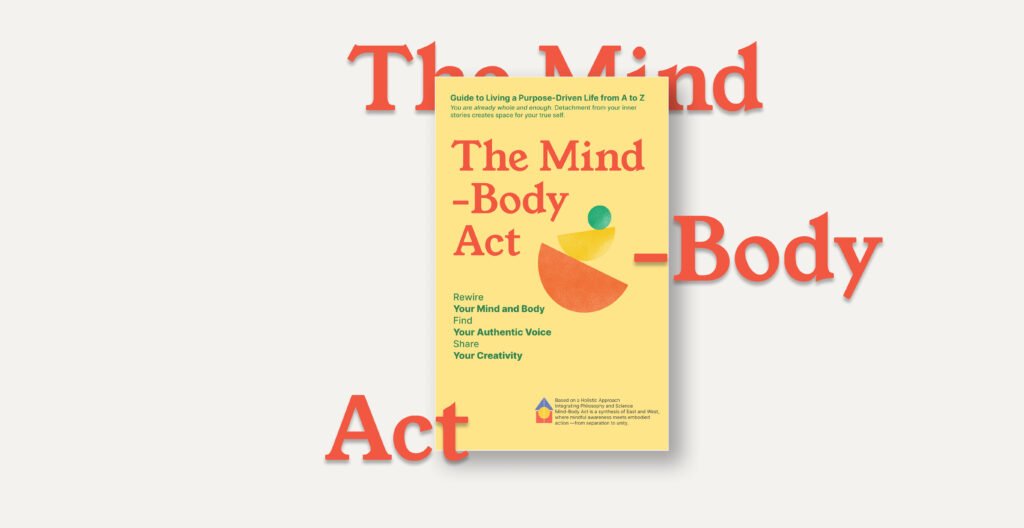
The Mind Body Act: A Self-Help Book to Discover Your Authentic Self
What if you stopped trying to control life and started to flow with it?
The Mind-Body Act Guide Book invites you to live from that shift. It offers “the mentorship I wish I had,” guiding you from the beginning of self-discovery to living with deeper flow and balance. With simple tools and deeper awareness, you can recognize your patterns, understand your energy, and reconnect with what truly matters.
Questions That Quietly Arise:
Why I feel broken: The real reason I think something is wrong with me
What happens when I stop trying to fix myself and start moving in harmony?
How do I find myself? What is the purpose of life?
This guide answers those questions with a step-by-step approach that blends science and experience. Instead of demanding perfection, it invites you to move forward with self-compassion. Through personalized nutrition, intuitive routines, and mindful movement, you learn to care for your mind and body in a natural, grounded way.
Detaching from your inner narrative dissolves suffering and brings you back to your authentic self. When you live in alignment, wholeness, and creativity, life becomes a natural expression of who you truly are. The Mind–Body Act guidebook offers one of the most comprehensive ways to understand and reclaim your actual response ability (responsibility, true meaning) —your power to choose presence, meaning, and conscious action. In other words, growth doesn’t require fixing who you are. It begins when you meet yourself honestly and shift forward with intention.
Moreover, this holistic guide blends modern science, timeless philosophy, Eastern wisdom, and Western psychology. It not only helps you calm the mind and reconnect with the body, but also helps you align your actions with what truly matters.
You’re not just thinking differently—you’re living differently. From separation to unity. From pressure to presence. Ultimately, the path begins when you remember what’s already within you. Ready to return to yourself? How you’ll do it, step by step. Let’s begin.
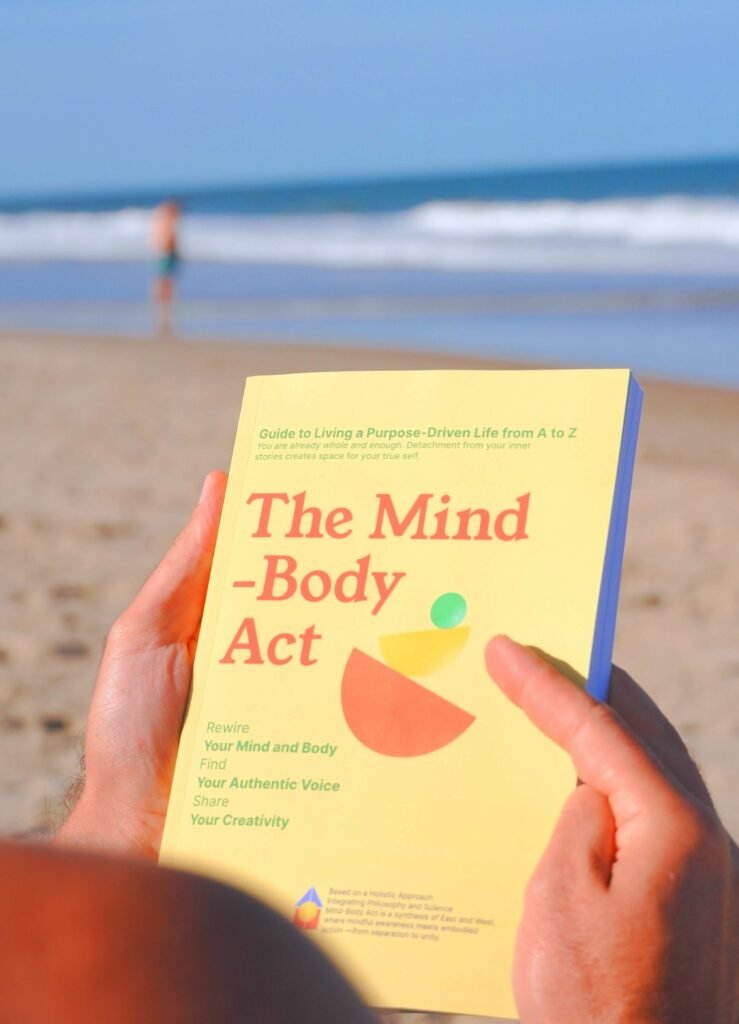
A New Approach: Seeing Reality Through an Authentic Lens
A new way of seeing begins when you look beyond the surface of daily life and sense the deeper patterns underneath. Modern science shows that everything in the universe is built from invisible forces and particles that constantly interact. Understanding this helps you view your own experience with more clarity. Life becomes less about reacting and more about perceiving the energy that shapes each moment. As awareness expands, you begin to sense reality through intuition, sensation, and presence rather than old narratives. This shift opens space for calm, creativity, and meaning.
Scientific Thought → Energy → Human Experience → Meaning of Life
Human experience sits at the intersection of science and awareness. Tiny particles form the building blocks of matter, yet they also influence how thoughts arise, how emotions settle, and how your body responds. When you recognize that subtle energetic patterns shape your internal world, life feels more connected. Meaning grows from this connection. You move from asking “Why is this happening to me?” to understanding how experiences interact with your physiology, attention, and perception. The more you sense these layers, the more grounded and intentional your life becomes.
Energy, Science & Consciousness
Your mind and body operate as a single intelligent system. Sensory signals travel through the nervous system, blend with stored memories, and shape how you interpret the world. Each moment becomes a conversation between energy and consciousness. When your internal state is balanced, this communication feels smooth. Colors look brighter, emotions feel clearer, and your decisions flow more naturally. When the system is overwhelmed, perception tightens. Practices that steady attention help you come back to a regulated inner environment where clarity returns and creativity becomes accessible again.
Aligning With Energy: New Science, Connectivity, and Wholeness
New scientific perspectives highlight how every system—biological, social, or cosmic—moves through patterns of connection. When you align with these patterns, your inner world becomes steady and coherent. Small grounding practices, intentional breathing, or mindful pauses shift your physiology toward harmony. This alignment doesn’t require perfection. It grows through presence. As the mind quiets, the nervous system finds balance, and your sense of wholeness strengthens. You feel more in tune with your environment and more open to possibilities.
From the Known to the Unknown: The Evolution of Scientific Understanding (Atoms → Standard Model)
Science evolves by stepping into the unknown. Atoms were once the smallest units of matter, yet deeper exploration revealed quarks, leptons, and forces shaping all existence. Personal growth follows the same path. Old assumptions fade as awareness expands. You begin to notice emotional patterns that once felt invisible. You sense more, understand more, and respond more intentionally. Moving from the known to the unknown becomes an inner journey—one that invites curiosity rather than fear and discovery rather than resistance.
Perception of Reality: How Mind and Body Sense Energy
Reality forms through your senses. Light, sound, touch, and emotion provide constant streams of information that your body interprets in real time. Perception becomes richer when you tune into these signals with openness rather than judgment. The mind organizes what the body feels. The body reflects what the mind believes. When the two communicate clearly, life feels more accurate and less distorted. You respond from presence rather than habit. This shift strengthens emotional intelligence and deepens your sense of connection.
Entropy and Grounding: Why Presence Increases Energy
When the mind becomes scattered, energy spreads thin. Focus weakens, motivation drops, and the body feels drained. Grounding reverses that pattern. Simple practices help your system return to stability. As internal order improves, energy rises. You feel more available to your day, more aware of your choices, and more steady in your actions. Presence becomes a renewable source of strength.
Why Mindful Living Aligns With Life’s Flow
Mindful living grows from a quiet inner foundation. When attention softens and the body settles, you enter a state where life feels less pressured. You become more responsive and less reactive. Stress loses its grip—creativity returns. The nervous system moves into balance, allowing you to engage with your environment naturally and clearly. Instead of forcing calm, you cultivate a deeper connection with the moment. That connection creates flow—an internal state where life feels aligned with your proper rhythm.
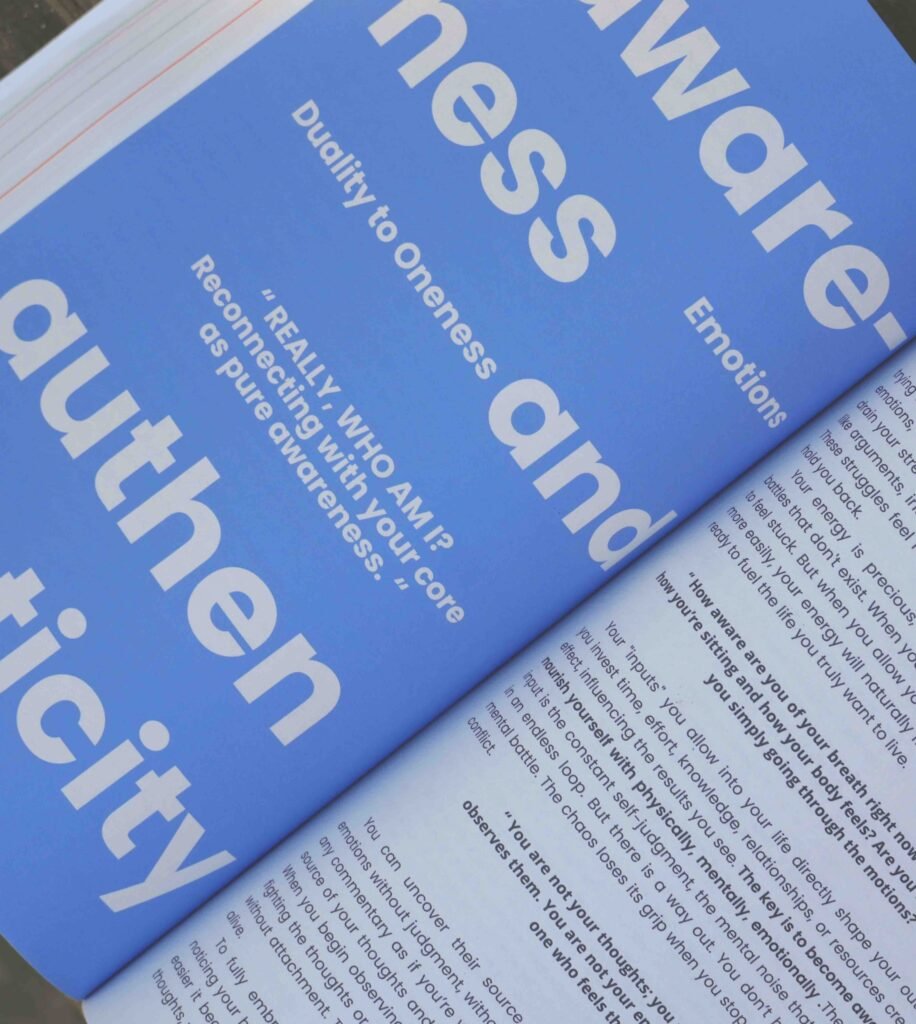
Embodied Cognition & The Mind–Body Connection
From Duality → Unity
Your body carries a deep intelligence that often speaks long before the mind understands. Breath slows your system, sensation reveals emotional truth, and posture shapes thought. As you tune into these internal cues, you begin to recognize patterns that silently shape your choices. Life becomes clearer when you sense it with your whole being rather than just your analytical mind. This is the beginning of unity—where mind and body move as one coherent system.
Embodied Cognition
Where is the Unconscious Mind?
What Is Embodied Cognition? (Descartes → Merleau-Ponty)
Traditional philosophy viewed mind and body as separate, yet modern understanding reveals a different story. Cognition is not confined to the brain. It emerges from movement, sensation, breath, memory, and the physical environment you interact with each day. Your posture influences thought, breath influences emotion, and environment shapes how clearly you perceive the world. When you sense yourself as an integrated whole, decisions carry more depth and authenticity.
Mind–Body Connection: How the Brain Creates the Mind and Shapes Reality
The nervous system continuously interprets signals from inside and outside the body. Those signals merge with memories, beliefs, and expectations to create what you experience as “mind.” Emotions appear before thoughts. Sensations guide perception. Each small cue—heartbeat, muscle tension, breath rhythm—forms the foundation of your reality. When you regulate the body, the mind becomes clearer. When the mind softens, the body relaxes. This loop forms the essence of the mind–body connection.
What Is the Mind–Body Connection? How the Mind Affects the Body and the Body Affects the Mind?
The relationship is reciprocal. Thoughts influence hormones and neurochemistry. Physical states influence thoughts, beliefs, and focus. When tension rises, perception narrows. When the body feels safe, awareness expands. Even subtle shifts in your breath or posture can change how you interpret the world around you. Understanding this connection empowers you to create internal coherence—an aligned state where clarity, emotional regulation, and creativity emerge naturally.
Conditioned Mindsets & Free Will
Much of human behavior is shaped by conditioning. Past experiences create patterns that play out automatically. Yet awareness introduces a new dimension: choice. As you recognize conditioned loops, you gain the ability to respond instead of react. Free will becomes a lived experience when unconscious patterns become conscious. In this shift, your internal world moves from habit to intention.
Are Our Memories Real? How the Brain Fills Gaps
Memory is not a perfect recording. The brain reconstructs past events using fragments, impressions, and emotional associations. Sometimes it fills the gaps with meaning rather than fact. Understanding this brings compassion to your past. The stories you’ve carried were built by an intelligent system trying to make sense of experience. When you recognize the fluid nature of memory, you stop being confined by it.
Brain as an Interface: How Thoughts and Models Are Built
The brain builds internal models to understand the world. Sensory information becomes concepts. Concepts become beliefs. Beliefs become identity. This interface helps you navigate life efficiently, yet it can limit perception when models become rigid. When awareness expands beyond these models, the world feels larger—more open, more nuanced, more alive.
How the Brain Creates “Self” and “Story”
Identity forms through repeated thoughts, emotional patterns, and memories. Over time, these elements weave into a personal narrative that feels solid. Yet the “self” is more fluid than it seems. It shifts with context, emotion, and state of consciousness. When you see the story as something constructed rather than fixed, you gain freedom. New possibilities for who you can become start to appear.
Phenomenology: How Consciousness Experiences the World
Phenomenology invites you to explore experience as it unfolds—before interpretation, before judgment, before narrative. You meet life through sensation, emotion, movement, and awareness. This direct experience reveals how consciousness shapes reality. The world becomes something you feel, not only something you think about. Presence deepens. Understanding grows from the inside out.
Living in Unity
Breaking Free From Conditioned Patterns
Conditioned patterns soften when you witness them with clarity. Breath creates space. Awareness offers perspective. As old reactions lose intensity, you begin responding from a more grounded place. This shift reveals a simple truth: unity grows when you stop fighting your inner world and start listening to it.
Ending Duality and Returning to Wholeness
Duality creates separation—mind vs. body, logic vs. emotion, past vs. present. Unity dissolves that separation. You experience yourself as one integrated field of awareness. Emotions move freely. Thoughts become lighter. The body feels more alive. Life responds to your inner coherence with greater ease.
Unity as the Foundation for Authentic Living
Authenticity emerges when your actions match your internal experience. Unity strengthens this integrity. When mind and body move together, decisions feel aligned. Relationships feel more connected. Creativity feels natural. You live in a place where you don’t have to perform. You express what feels true.
How Inner Stories Expand or Limit Unity
Stories shape perception. Some expand the possibility. Others tighten the world. When you observe these stories with presence, you sense which ones create alignment and which ones create tension. Awareness gives you the ability to choose the narratives that support unity, openness, and emotional freedom.
Rewriting Identity Through Presence
Identity evolves when you stay close to the present moment. Each pause offers space to reshape beliefs, respond differently, and move beyond old versions of yourself. Presence becomes a quiet tool for transformation. It opens a path to an identity rooted in wholeness rather than conditioning—an identity that feels aligned, grounded, and authentically yours.
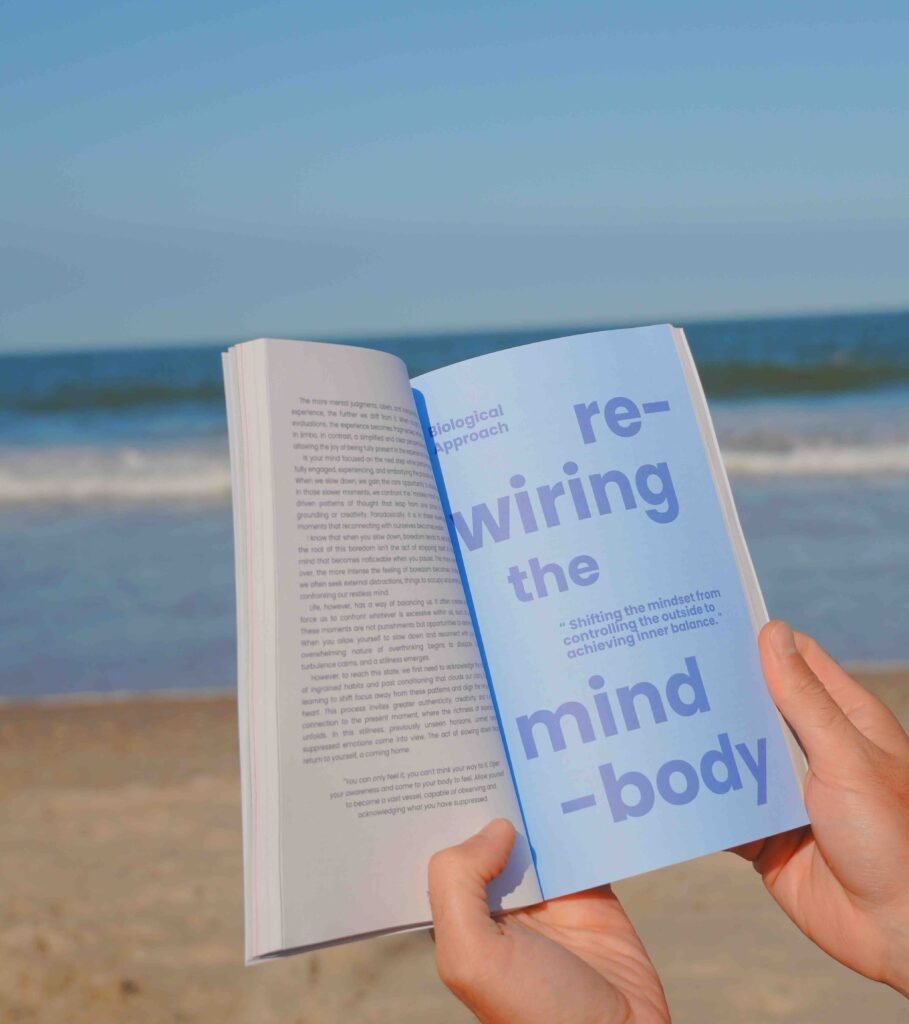
Rewiring the Mind–Body System
Neuroplasticity → Nervous System → Introspection → Regulation
Rewiring begins the moment you become aware of your inner patterns. Each conscious breath, each regulated pause, and each intentional shift creates a small opening in the nervous system. With time, those openings become pathways. New choices emerge. Emotional resilience strengthens. Your sense of self-worth comes from within, not from external approval. As the system becomes more coherent, you stop living on autopilot and begin choosing from a place of presence. Life feels more grounded, more connected, and more aligned with who you are becoming.
The Brain and Its Adaptive Power
The human brain is designed to change. Experiences, emotions, beliefs, and even the smallest habits reshape neural pathways. This adaptability offers hope in moments of overwhelm and clarity in moments of transition. Awareness acts as the catalyst. Intention gives direction. Together, they transform old survival patterns into new forms of strength.
Neuroplasticity in Action: How to Change Your Life
Every thought, emotion, and repeated behavior trains the brain to respond in specific ways. When you shift your focus toward patterns that support well-being—breath regulation, emotional awareness, mindful movement—you teach your nervous system to rely on stability instead of stress. Change begins internally. Over time, your external world adjusts to that inner shift. That is neuroplasticity in action: small, consistent choices reshaping the architecture of your mind.
Reptilian Brain Function: Understanding the Three Brains
Understanding why you react, feel, and decide the way you do begins with knowing the three brains that shape your behavior. The reptilian brain drives instinct and survival, the mammalian brain fuels emotion and connection, and the human brain guides reflection and choice. Together, they form a dynamic system that influences your stress responses, relationships, habits, and daily decision-making. When you learn how these layers interact, you stop fighting your mind and start working with your biology, building greater awareness, calm, and emotional intelligence.
Limbic System: How Your Emotional Brain Reacts instead of Responds
The limbic system explains why your body reacts before your mind understands. What feels like “overreacting” is often an old survival pattern running faster than your awareness. This guide breaks down how the amygdala, hippocampus, hypothalamus, thalamus, cingulate gyri, basal ganglia, and dopamine pathways work together—and how these emotional loops shape your habits, memories, and defense mechanisms. When you understand the limbic system, your reactions make sense, and real change becomes possible.
The Mind, Heart, and Gut Connection: Three Brains Finding Balance for Better Living
Left vs. Right Brain Integration: Whole-Brain Living
The left brain organizes, analyzes, and structures. The right brain imagines, feels, and connects. True clarity comes from integrating both. When you rely solely on logic, life feels narrow. When you rely only on intuition, life feels ungrounded. Integration creates balance. You perceive the world with accuracy and depth, combining structure with insight. Whole-brain living becomes a doorway to emotional intelligence and creative expression.
How to Stop Being Reactive: From Limbic Response to Inner Observer
Reactivity happens when the limbic system takes the lead. Emotions surge. Thoughts loop. The body tenses. Yet the moment you step into the role of observer—watching the sensation without collapsing into it—the pattern begins to dissolve. Breathing slows the system. Awareness widens perspective. You respond from clarity rather than reflex. This shift is subtle but transformative. It’s where regulation begins.
When Does the Adolescent Brain Fully Develop? Understanding Prefrontal Cortex Maturation
The prefrontal cortex, the part responsible for planning, emotional regulation, and long-term thinking, matures later than most people realize. Its development continues well into the mid-twenties. This explains why earlier experiences shape habits so strongly and why adult awareness can rewrite them. Maturity does not eliminate emotion; it strengthens your ability to guide it.
Habits to Strengthen the Prefrontal Cortex
Strengthening the prefrontal cortex builds emotional resilience, long-term focus, and inner stability.
How to Stop Anxiety: Grounding Techniques to Settle Down and Reconnect with Your Body
Nervous System Mastery
Mastery begins with awareness. Your nervous system’s moment-to-moment state shapes every sensation, emotion, and impulse. When you learn how to sense activation, soften tension, and guide your internal signals, you shift from living in reaction to living in presence. You become the calm within the experience rather than the one pulled by it. Mastery is not control; it’s connection.
Nervous System Balance: Understanding Fight-or-Flight and Rest-and-Digest (Polyvagal Theory & Vagus Nerve)
Your nervous system operates through two primary states: activation and restoration. Fight-or-flight mobilizes the body for protection, while rest-and-digest opens space for healing and clarity. Polyvagal Theory explains how safety cues soften your physiology, allowing the vagus nerve to guide you back into balance. When the system feels safe, thinking becomes clearer and emotions settle more easily.
The Gut–Brain Axis: The Hidden Pathway Connecting Your Mind and Body
Your gut communicates directly with your brain through a constant exchange of chemicals, signals, and microbes. This pathway shapes mood, focus, and emotional stability. When digestion is calm, the mind follows. When the gut is inflamed or stressed, thoughts become scattered. Balance grows when you nourish both systems together.
You Are the Observer: Realize Your True Power
Your greatest strength appears when you step into the role of the observer. Instead of collapsing into thoughts or emotions, you watch them with clarity. The moment you observe, patterns lose their intensity. You begin choosing instead of reacting. Awareness becomes the doorway to inner freedom.
How Emotional Intelligence Builds Resilience
Emotional intelligence strengthens your ability to stay steady under pressure. As you track sensations, slow your breath, and name your emotional state, your nervous system becomes more adaptive. You recover from stress more quickly and navigate challenges with clarity. Resilience grows from this internal flexibility.
5 Characteristics of Emotional Intelligence
- Awareness of internal states
- Ability to regulate emotion
- Empathy grounded in boundaries
- Flexibility in response
- Capacity for reflection and repair
Somatic Reset: Returning to Factory Settings
A somatic reset brings the body back to a state of neutrality. Muscles release. Breath deepens. The mind softens. In this state, survival patterns lose their grip, and the nervous system reorganizes toward a state of balance. These micro-resets make the entire day feel lighter.
Instant Grounding Techniques for Emotional Loops
Grounding breaks the cycle of emotional spirals. A slow exhale, a conscious posture shift, or a sensory check-in brings you back into the present moment. These simple actions interrupt looping thoughts and stabilize the system.
Motivation & Mood: Dopamine, Serotonin, Hormones
Motivation rises when dopamine pathways are steady. Mood stabilizes when serotonin is balanced. Hormones support this equilibrium, shaping energy, clarity, and emotional flow. Healthy routines, sleep, and mindful attention strengthen these natural rhythms.
Why the Modern World Keeps the System in “ON” Mode
Constant stimulation—screens, noise, pressure, comparison—pushes the nervous system into chronic activation. The body interprets this as an ongoing threat. Balance returns when you create intentional pauses that remind your system it is safe.
Environmental Cues That Calm or Activate the Mind–Body
Soft light, nature, warm tones, and familiar scents calm the system. Harsh noise, clutter, and tight spaces activate it. Your environment continuously shapes your emotional and physiological state. Small changes create powerful effects.
Emotional Depth & Introspection
Emotional depth grows when you meet your inner world with curiosity rather than judgment. Introspection brings clarity to what you feel, why you feel it, and how those emotions shape your behavior. Each pause becomes an entry point into deeper understanding.
How the Mind–Body Creates Emotions (Lisa Feldman Barrett)
Emotions emerge when the brain predicts what sensations mean. The mind interprets bodily signals, memories, and context to form an emotional experience. When you sense the body with accuracy, emotional clarity follows naturally.
Introspection: How to Notice What’s Happening Inside in Real Time
Introspection means feeling your internal world as it unfolds. Sensations offer clues. Breath reveals tension. Awareness highlights emotions before they become overwhelming. The more you stay with the feeling, the more grounded the experience becomes.
Primary Emotion vs Secondary Emotion
Primary emotions are raw, direct, and immediate. Secondary emotions are reactions to those primary signals—often shaped by past experiences or learned patterns. Distinguishing the two gives you greater agency and reduces emotional confusion.
Ending Overthinking Through Introspection: Calming the Monkey Mind
Overthinking dissolves when attention returns to sensation. Breath anchors the mind. Body awareness interrupts mental loops. As presence strengthens, the “monkey mind” softens, and clarity returns.
Emotions as Energy: What Feelings Actually Mean
Emotions carry information. They point to needs, boundaries, desires, and fears. When you treat emotions as energy rather than identity, you move through them without losing yourself.
From Over-Identification to Functional Empathy
Empathy becomes functional when you feel with awareness rather than merging with another person’s emotion. Boundaries stay intact. Compassion stays open. Over-identification dissolves into clarity.
Self-Sabotage Explained
Self-sabotage appears when safety patterns override growth. Old beliefs try to protect you from uncertainty. Awareness exposes these patterns and gives you room to choose supportive behaviors.
How to Control Your Emotion: Emotional Regulation Skills
How to release trapped emotions: FEAR-DESIRE-CORE NEED. Regulation grows through breath, grounding, movement, reframing, and sensory awareness. Each skill strengthens the nervous system’s ability to stay steady when emotions rise.
Freemood: Breaking Emotional Loops & Inner Cycles
Freemood is the practice of noticing emotional loops early and interrupting them with presence. As the loops weaken, new patterns of clarity, regulation, and authenticity take their place.
Silent Mind: Re-Discovering Your Natural Oneness
A silent mind is not the absence of thought. It’s the presence of awareness. In this space, tension fades and unity emerges. You experience yourself as whole, steady, and connected.
Somatic Tracking: Feeling First, Story Later
Somatic tracking invites you to meet sensation before creating a narrative. When you feel it first, the story loses urgency. Awareness deepens. The nervous system relaxes.
Micro-Resets to Exit Emotional Spirals (30–90 Seconds)
Short resets calm the system quickly. A deep exhale, a shift in posture, or softening the jaw sends a safety signal through the body. These tiny practices prevent spirals from spiraling out of control.
Embodied Decision-Making
Decisions become clearer when you listen to the body as much as you do to the mind. Sensations reveal alignment. Tension reveals hesitation. Embodied choices lead to grounded action.
Reframing Inner Dialogue Without Suppression
Inner dialogue softens when you speak to yourself with awareness instead of force. Reframing creates clarity while honoring the feeling beneath the thought. Suppression disappears; understanding expands.
Clarity Through Sensation-Based Awareness
Clarity grows when you use sensation as guidance. Breath, posture, and internal signals become your compass. The mind interprets, but the body reveals the truth.

Shine Your Creativity
From Fear → Expression → Flow
You don’t need to wait until you’re “ready” to create. Instead, move with the energy of your ideas. Even if fear shows up, create freely anyway. In addition, every act of expression builds confidence and momentum. For example, a single small step, such as writing a sentence, sketching a shape, or sharing a thought, can shift your entire energy. Therefore, the creative path is not about being fearless, but about choosing to move with honesty and joy.
Understanding Creativity
What Is Creativity? The Biology Behind Inspired Thinking
Creativity appears when the nervous system feels safe enough to explore. The mind blends memory, sensation, and intuition into new patterns. As emotional signals soften and awareness widens, fresh ideas rise with ease.
Curiosity as the Source of Creative Intelligence
Curiosity opens the mind. When you approach the world with wonder instead of pressure, your attention stays flexible. This flexibility invites insight, allowing imagination to move without resistance.
Coping Mechanisms: How Managing Stress Enhances Creativity
A balanced level of activation sharpens focus and energy. When you regulate stress rather than suppress it, the mind becomes alert, and creative connections form more quickly.
DMN and Personal History: How Your Inner Narrator Is Formed
The Default Mode Network weaves memories, emotions, and beliefs into the inner story you hear each day. When you observe this narration with awareness, you create space for new interpretations and more imaginative thinking.
Self-Esteem: How to Stop Negative Self-Talk and Free Your Mind
The Default Mode Network: How Everyday Routines Spark Creativity
Simple routines free the mind from effort. While the body moves automatically, the brain drifts into deeper reflection. This wandering state opens the door to ideas that rarely appear under pressure.
Unlocking Creativity Through Deep Relaxation
Relaxation widens perception. As the body releases tension, mental noise fades, and intuitive insights surface naturally. Creativity grows in the space that appears when you finally allow yourself to slow down.
Flow State: Creative Energy Through the Power of Being Before Doing
Flow happens when presence replaces effort. The body leads, the mind follows, and creative energy moves on its own. Doing becomes an expression of being, not a performance of productivity.
Create Even When You’re Afraid: A Mindset That Frees Expression
Fear signals expansion. When you meet it with awareness, the nervous system stabilizes, and courage rises. Creativity flourishes the moment you stop waiting for permission to feel ready.
How Routine Creates the Conditions for Creative Insight
Rhythmic habits calm the nervous system. With predictability in your day, your mind spends less effort on survival and more on exploration. Insight grows when your inner world feels steady.
Breaking Mental Blocks Through Simple Daily Practices
Mental blocks dissolve through consistent regulation. Breathwork, somatic sensing, and mindful pauses bring you back to the present, where the mind can reorganize, and inspiration can form.
Sharing Creativity
The Link Between Boredom and Creative Expansion
Boredom creates space. When the mind isn’t overstimulated, unused energy turns inward, awakening imagination and inviting new perspectives.
Stop Forcing Yourself: Create Without Resistance
Creativity collapses under pressure. When you soften effort and return to sensation, expression becomes natural. Ideas emerge from freedom, not force.
From Inner Harmony to Outer Expression
Inner balance shapes the way you share your work. When your nervous system feels safe and grounded, expression flows from coherence rather than urgency.
How Creativity Expands Self-Awareness
Every creative act mirrors your inner world. Colors, words, and shapes reveal emotional patterns and unspoken desires, giving you insight into who you are becoming.
FOMO and Perfectionism: Softening the Inner Chase
Fear of falling behind and the pressure to be flawless push the mind into survival mode. Awareness interrupts this cycle, allowing you to create from authenticity instead of comparison.
Courage and Vulnerability
Creativity requires openness. Each expression carries a piece of you. Vulnerability becomes strength when guided by presence, not fear.
The Power of Presence: From Pain to Creativity
Pain holds emotional charge. When you meet it with awareness rather than avoidance, that energy transforms into meaning. Creativity becomes a pathway from intensity to clarity.
Awareness and Authenticity
Ego → True Self → Presence
Awareness grows the moment you pause and watch your inner world with honesty. Thoughts become movements, emotions become signals, and your deeper truth begins to surface. As judgment softens, the authentic self steps forward naturally. You come home to who you already are—present, grounded, and whole.
The Inner Landscape
What Is Ego? DMN and Jung’s Psychology of Wholeness
The ego forms through memory, conditioning, and personal history. The Default Mode Network holds these stories together, shaping the inner narrator that interprets your life. Jung described wholeness as the integration of these parts rather than their elimination. When you recognize the ego as a structure—not your identity—you gain space to meet yourself with clarity.
The Power of Being Both Observer and Actor
Awareness allows you to move fluidly between observing your inner world and participating in your outer one. When you sense yourself from both perspectives, reactions soften, and choices become intentional. You live more consciously while still engaging fully with life.
Detaching from the False Self to Access the True Self
The false self grows from expectations, defenses, and unresolved emotional patterns. As you separate from these conditions, you reconnect with a deeper presence. This presence is your true self—quiet, steady, and unforced. It emerges when you stop trying to perform and start allowing.
The Path to Self-Awareness
Self-awareness unfolds through gentle attention. By sensing your body, tracking emotions, and noticing mental patterns, you begin to understand what drives your reactions. Awareness reveals what is yours, what is conditioned, and what no longer needs to continue.
Authenticity: What It Is and How to Embrace It
Authenticity is the alignment between your inner experience and your outer expression. You embrace authenticity when you stop resisting your feelings, honor your needs, and act from a place of presence rather than fear. It is less about finding yourself and more about allowing yourself to be.
From Duality to Oneness: Awareness & The True Self
Duality creates separation between mind and body, fear and clarity, ego and essence. Awareness dissolves this separation. When you sense your inner world directly—breath, emotion, sensation—oneness becomes a lived experience. You feel whole because you are no longer divided within yourself.
Living With Life Force: Cerebrospinal Fluid and the Pineal Gland
Your body holds a subtle intelligence. Cerebrospinal fluid carries signals that regulate your internal state. The pineal gland supports circadian rhythm, perception, and intuitive awareness. When your system is balanced, this life force flows freely, enhancing clarity, creativity, and presence.
The Mind–Body Problem: Dualism vs. Non-Dualism
Dualism holds that the mind and body are separate. Non-dual traditions view them as two expressions of one field of experience. Modern neuroscience leans toward unity—thoughts shape the body, and the body shapes beliefs. Living as one integrated system brings coherence to your inner world.
Beyond Ego: Finding Self-Worth Through Authentic Expression
Self-worth deepens when you stop proving and start expressing. When you act from authenticity, the need for external validation fades. Worth becomes internal, steady, and grounded in your presence rather than outcomes.
Self-Actualization from Maslow to Today: Beginning the Journey
Self-actualization is not a final state; it is an expanding relationship with your potential. You begin this journey by following your curiosity, honoring your emotions, and aligning your actions with your inner truth. Growth becomes a natural movement rather than a forced goal.
How Self-Stories Distort Authenticity
Your mind creates stories to make sense of experience. Some stories empower; others limit. When you observe these narratives without merging with them, their grip loosens. You see life as it is, not as old stories describe it.
Rebuilding Coherence During Adulthood Transitions
Transitions challenge your identity and disrupt old patterns—coherence returns when you ground yourself in sensation and awareness. As you stabilize the nervous system, your inner world reorganizes, and a more authentic version of you emerges.
The Difference Between Desire and Intention
Desire often arises from unmet needs or emotional impulses. Intention grows from clarity and presence. Desire pulls outward; intention guides inward. When you act from intention, your choices align with who you truly are.
Authenticity: Allowing What’s Already in You to Emerge
Authenticity is not something you create; it’s something you uncover. As you soften resistance, regulate your system, and trust your inner signals, what is real in you naturally rises to the surface. Authenticity becomes effortless—an expression of your true self living openly.
Mindful Living From the Heart
Heart Coherence → Compassion → Inner Security
Mindful living begins when presence becomes your natural rhythm. With each breath, your awareness returns to the body, and your emotional landscape becomes clearer. As the heart settles, the mind softens, and life feels less chaotic. This grounded way of living strengthens your relationship with yourself and deepens your connection to the world around you.
Heart-Based Awareness
Awareness expands when you pay attention to the subtle signals of the heart. Sensation, breath, and emotion guide you toward a deeper form of clarity. When you tune into the heart’s rhythm, you sense truth without overthinking.
What Mindfulness Is (and Isn’t)
Mindfulness is not about forcing calm or eliminating thought. It’s the practice of noticing experience as it unfolds—without rushing to escape or control it. When you stop trying to change the moment, the moment becomes easier to meet.
Coherence Breath: Receiving Guidance From the Heart
Slow, steady breathing synchronizes the heart and mind. As coherence arises, the nervous system shifts toward balance. In this state, intuition becomes stronger, and decisions feel more aligned with your values.
Introspection: Freeing Yourself From Suffering and Mood Swings
Introspection helps you notice what is happening inside in real time. When you observe thought, sensation, and emotion without judgment, suffering begins to dissolve. You gain the clarity to respond rather than react.
How to Control Your Mind: Finding Stillness and Reconnecting With Life
Control emerges through presence, not tension. When you pause and bring attention to your breath, the mind naturally slows. Stillness appears. Life feels more connected because you’re no longer lost in thought—you’re here.
What does living in the moment mean? How to be more present every day?
Releasing Stuck Energy to Feel Alive Again
Stuckness often appears when energy has nowhere to move. Breath, movement, and somatic awareness help release tension and free emotional charge. As the body opens, the mind follows, and possibility returns.
Opening New Possibilities Through Presence
Presence is expansion. When you anchor attention in the now, your nervous system relaxes, and new ideas appear. You stop repeating old patterns and start noticing fresh pathways.
Embrace Unconditional Love and Self-Acceptance
Self-acceptance is the heart’s natural state. When you stop judging your emotions and meet yourself with compassion, your inner world becomes safer. Love softens defenses and strengthens emotional freedom.
Emotional Security and Inner Peace
Security grows from within. As you regulate your system and understand your emotional signals, peace becomes accessible. You feel grounded because you no longer resist what you think—you know it.
Navigating Life Through Primary-Emotion Awareness
Primary emotions provide clear information. They arise before thought and reveal what your body needs. When you learn to sense these signals, you navigate life with greater accuracy and less confusion.
Sympathy vs. Empathy
Sympathy observes from distance; empathy feels with awareness. Empathy becomes functional when you stay grounded in your own body while sensing another’s experience. Boundaries remain intact, compassion remains open.
Why Heart-Based Living Creates Inner Freedom
Heart-centered awareness softens fear and reduces the mind’s tendency to defend. When you live from the heart, choices come from truth rather than pressure. Inner freedom grows because you stop fighting yourself.
Understanding Yourself Without Trying to Fix Yourself
Understanding is more profound than fixing. When you witness your emotions with care, you stop treating yourself as a problem. Acceptance creates inner space, and clarity rises naturally.
The Quality of Your Life Depends on the Emotions You Focus On
Where your emotional attention goes, your reality follows. When you stay connected to emotions that steady your system—gratitude, curiosity, compassion—your day unfolds with more ease and meaning.
Anger: A Clear Sign That Your Boundaries May Have Been Violated
Anger often signals that something crossed your inner limits. When you sense it early and respond with awareness, anger becomes information instead of chaos. It guides you back to self-respect and alignment.
Daily Practices to Reconnect With Yourself
Routines → Lifestyle → Nervous System → Clarity
Daily practices become your anchor. When you create rhythms that soothe the body and steady the mind, clarity appears naturally. These small habits shape the nervous system, nourish your emotional landscape, and transform your lifestyle into a calmer, more intentional experience. Each routine becomes a quiet doorway back to yourself.
Grounding Practices
Why Routines Are the Infrastructure of a Balanced Life
Structure creates safety. When your day follows a gentle rhythm, the nervous system relaxes, and your inner world becomes easier to navigate. Routine gives your mind space to think clearly and your body permission to rest.
Balance Through Routine: Why Consistency Matters
Consistency strengthens your internal stability. When you repeat supportive habits, your system learns where to find calm. Over time, steadiness replaces chaos, and presence becomes more accessible.
Sleep and Hydration: Foundations of Focus and Mood
Sleep repairs the brain. Hydration supports cognition and emotional regulation. When these foundations are nourished, your mood steadies, your focus sharpens, and your day feels lighter.
You Are What You Eat: The Mind–Body Connection to Nutrition
Food influences energy, clarity, and emotional tone. Nourishing meals regulate blood sugar, support gut health, and communicate safety to the nervous system. When your body feels cared for, your mind follows.
Exercises as Medicine: Calming the Mind Through the Body
Exercises release tension stored in muscles and fascia. As the body softens, emotional weight lifts, and the mind clears. Even gentle stretching resets your internal state.
Nervous System Reset: Cold Exposure and Breathwork
Cold exposure sharpens awareness and activates resilience. Breathwork balances internal chemistry and reduces emotional overload. Together, stabilize your system and deepen inner strength.
Choosing the Right Meditation for You
Different meditations serve different needs. Breath-based practices settle the mind. Somatic meditations bring presence into the body. Open-awareness meditation expands clarity. Choose the one that feels natural to your system.
Clarity & Mental Organization
Stepping Outside Your Comfort Zone
Growth begins at the edge of comfort. When you try something unfamiliar, your brain creates new pathways. Confidence rises. Life opens.
Journaling and Mind Mapping for Clarity
Writing organizes internal chaos. As thoughts move onto the page, patterns become visible. Mind mapping reveals connections you may not notice in your head. Clarity expands from structure.
Building a Life of Quality Through Daily Micro-Actions
Small habits shape the direction of your life. Five minutes, a cup of water, a quiet pause—they accumulate. Micro-actions create macro-changes.
Digital Detox to Clean Attention
Constant stimulation keeps the mind in alert mode. Screens amplify mental noise. Stepping away restores focus, calms the nervous system, and resets your internal rhythm.
Nervous-System-Friendly Daily Mental Practice
Gentle attention practices—breathing, grounding, and sensory check-ins—help regulate emotions and broaden perspective. With daily repetition, your inner world becomes more coherent.
Plan Your Day Wisely and Accomplish More With Less Effort
Planning reduces overwhelm. When you organize your day around energy rather than pressure, productivity increases and stress decreases. You get more done by working with your system, not against it.
The Power of Focus, Inner Shifts, and the Method of Synthesis
Where your attention goes, your life naturally follows. When you shift your focus from mental loops to present-moment awareness, your inner landscape reorganizes. Clarity grows. The nervous system settles. Transformation begins not through force but through steady, open, and grounded attention.
Understanding the Method
The Method of Synthesis: Moving From Duality to Wholeness
Synthesis unites the parts of your experience that once felt separate. Thoughts, emotions, sensations, and memories become one integrated field. As duality dissolves, you begin to sense life through wholeness rather than fragmentation. This shift is the foundation of true healing.
Why We Feel “Broken”: Shifting Energy Instead of Fixing Yourself
The feeling of being broken often comes from blocked energy, unresolved emotion, or old protective patterns—not from defectiveness. When you stop trying to “fix” yourself and instead shift how energy moves through your system, relief appears. Balance comes from understanding, not self-attack.
Inner Focus Shapes Outer Experience
Your internal focus shapes how you interpret the world. When attention is tangled in fear or old narratives, life feels heavy. When attention returns to breath, sensation, and presence, external circumstances soften. Inner focus becomes the compass that guides outer experience.
Breaking Patterns Through Awareness
Healing Suffering Loops
Suffering loops form when the mind recycles the same thought-emotion-body pattern without resolution. Awareness interrupts the cycle. As you sense the emotion, observe the thought, and soften the body, the loop loses momentum. Healing emerges through presence, not pressure.
Returning to the Present Moment: Finding Where Your Mind Is Stuck
The mind often loops around what it cannot resolve. When you identify where attention is trapped—an old fear, a memory, a story—you create the space needed to return. Presence interrupts the loop and brings your awareness back into the now.
Self-Reflection = Understanding and Integrating the Past
Self-reflection helps you see where your patterns come from. Memories gain context. Emotional reactions make sense. Integration happens when you connect past experiences with your present awareness.
IFS: Gathering the Lost or Exiled Parts of Yourself
Internal Family Systems teaches that every part of you carries a role. Some protect, some fear, some hide, some long for connection. When you welcome these parts with compassion, they return home. Unity replaces internal conflict.
Logotherapy: Using Pain as a Pathway to New Possibilities
Meaning transforms suffering. When you meet difficulty with curiosity and purpose, pain becomes a stepping stone instead of a wall. Logotherapy reframes challenges as invitations to grow into a deeper, more resilient self.
Daily Micro-Integration
Transformation deepens through small, consistent practices. A slow breath, a short pause, a moment of grounding—each one integrates emotional experience into the body. These micro-integrations accumulate, creating lasting inner stability and clarity.
Living Embodied
Mind–Body Act + Presence + Somatic Clarity = True Inner Work
Inner work begins when you sense your body, observe your emotions, and meet your thoughts without judgment. Presence brings clarity. Somatic awareness reveals truth. Together, they form a grounded pathway to emotional integration and inner strength.
Introspection = Present-Moment Inner Awareness
Introspection is the practice of noticing your internal world precisely as it is. Sensations, emotions, impulses, and thoughts become information. The more present you are with them, the less power they have over you.
Embodied New You
Embodied New You is the moment your life begins shifting from the mind’s stories to the body’s truth. As you reconnect with breath, sensation, and present-moment awareness, your inner world settles into alignment. The nervous system regulates, emotions feel clearer, and your choices begin to reflect who you genuinely are. In this state of embodiment, the “new” you is your most authentic self, emerging with grounding, clarity, and authenticity. We will learn how to do it.