The Mind-Body Connection: How to Shape Your Reality
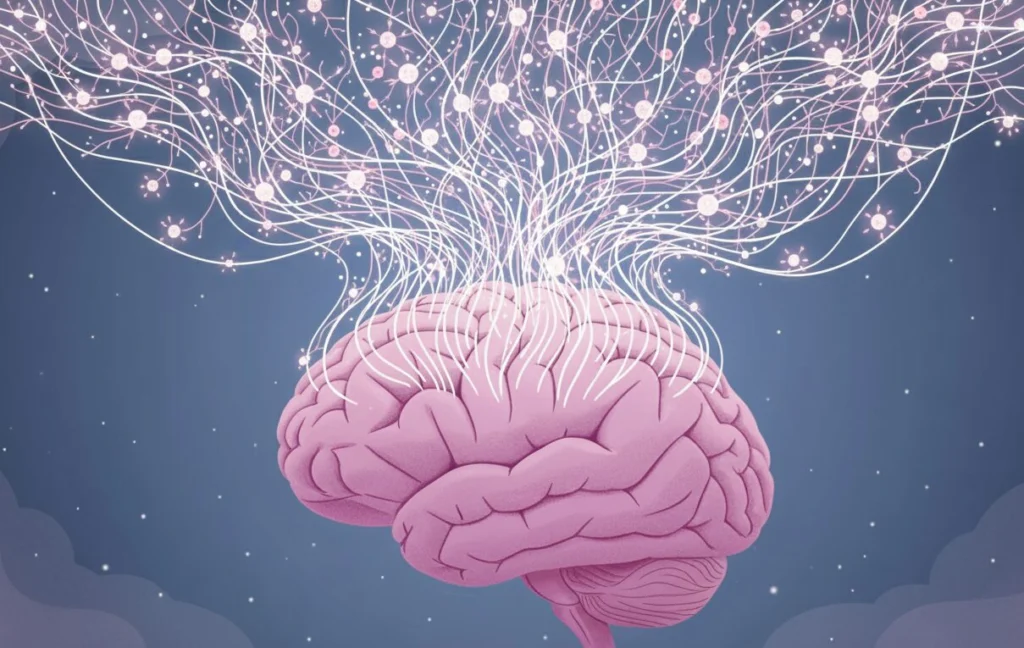
What if every thought you have doesn’t just respond to the world, but actually builds it — shaping your mental and physical reality through the mind-body connection? When you begin to understand this Mind-Body connection, you no longer try to force external change. You start shaping life from within—calming your mind, balancing your emotional state, and creating coherence among your thoughts, emotions, and awareness. In doing so, you strengthen the connection between mind and body, promoting overall health, resilience, and a deeper sense of harmony.
I remember the first time I truly felt this — noticing how a single shift in thought could soften my breath and steady my heartbeat. In that moment, the mind-body connection stopped being a theory and became something alive—an intimate conversation among mind, body, and awareness. It wasn’t something to understand, but something to feel. That realization became the seed of what we explore at Freemoodco — the bridge between awareness and biology, where the invisible shapes the visible and every emotion leaves its echo within the body.
In essence, the mind, far from being a passive observer, is the active architect of your mental state and emotional experience. Every idea, memory, and emotion sends signals through your nervous system, influencing how your body and mind respond to life. Meanwhile, the body constantly communicates back — through heartbeat, hormones, and physiological feedback — reminding us that mental and physical health are deeply intertwined.
This ongoing dialogue between mind and body shapes perception. It’s not just the body that feels and the brain that interprets; it’s the field of awareness that integrates them, transforming energy into experience. Together, they don’t merely observe reality — they construct it, moment by moment.
Key Aspects
- The mind is not located in one place; it emerges from the interaction between brain activity, bodily signals, and conscious awareness.
- Early relational experiences form the foundation of the mind–body system. Family, culture, and emotional attunement wire core patterns of safety, identity, and perception.
- Predictive processing shows that reality is constructed, not passively received.
- Neuroplasticity allows you to rewire patterns through awareness.
- The heart, gut, and brain operate as a single integrated intelligence.
- Chronic stress collapses the mind–body connection.
- Awareness restores coherence and expands perception. When attention steadies, the nervous system regulates, the mind clarifies, and emotional integration becomes possible.
- The “self” is a dynamic narrative created by the brain. Gazzaniga’s split-brain work shows the interpreter module fabricates continuity from bodily and neural impulses.
- Regulation, presence, and understanding dissolve old conditioning and restore inner freedom.
The Science Behind the Mind-Body Connection and How Thoughts Shape Reality
Understanding the Connection Between Mind and Body
A healthy mind-body connection doesn’t appear out of nowhere. It grows within a web of relationships that shape both your mental and physical health. From the very beginning, your nervous system learns safety, trust, and emotion through the energy of your environment — the culture that surrounds you, the family that holds you, and the silent expectations woven into your sense of belonging.
As a child absorbs worlds, every tone, glance, and unspoken feeling becomes part of the brain’s emotional and physiological language, influencing heart rate, stress response, and patterns of thought. These early experiences form neural pathways that define how you perceive, interpret, and respond to life. Over time, they build your resilience — or weaken it — depending on the quality of emotional attunement you received.
Identity forms where memory and relationship meet. Each moment of approval, rejection, or affection leaves a neural imprint that silently answers the question, “Who am I?” This imprint shapes both the mind and the body, determining how open you feel to connection, love, and life itself.
The Mind Grows Within Connection: How Culture and Family Shape the Mind-Body System
The thoughts running through your mind often echo ancestral patterns and cultural narratives that unconsciously guide your behavior. To awaken is to recognize this — to notice the water you’ve been swimming in all along. True freedom doesn’t come from escape; it comes from understanding and nurturing the relationship between your mind and body.
Awareness becomes the first breath of liberation — the realization that you are not the thought, not the emotion, but the consciousness that observes them. When you become aware of old patterns, your nervous system begins to settle. Through mindfulness exercises and meditation, you calm your mind, reduce chronic stress and anxiety, and activate your body’s natural healing abilities.
When awareness and emotional regulation strengthen together, you experience the true power of a strong mind-body connection—one that supports mental clarity, health and well-being, and a grounded sense of peace in daily life.
Awakening Through Awareness: Living in Mind-Body Harmony
Unconscious patterns live in the body as tension, posture, and breath. When you begin to observe them with mindfulness, you reconnect with the mind-body connection and activate your innate capacity for healing and balance.
To awaken is to notice the water you’ve been swimming in all along to realize that freedom is not escape, but understanding. When you see the pattern clearly, you begin to move beyond it. Each moment of awareness becomes a reset, a soft realignment of body and mind toward clarity and coherence. Awareness becomes the first breath of liberation: the moment you remember that you are not the story or the emotion, but the consciousness that sees it. Through this lens, mindfulness becomes not a practice, but a way of being a living embodiment of the mind-body connection that promotes health, well-being, and emotional freedom.
Where Is the Mind? Exploring the Relationship Between the Brain, Body, and Consciousness.
The mind arises in the space between the brain’s electrical rhythms, the body’s felt intelligence, and the field of awareness that holds them both.
How the Brain Creates and Connects to the Mind: A Holistic Approach to the Mind-Body Relationship
Patterns and Synchrony
Inside the brain, billions of neurons communicate through electrical and chemical signals that sustain the mind-body connection. When these interactions form rhythmic patterns, thought, emotion, and perception arise. The mind is not a static object but a living process — a dynamic flow that mirrors the pulse of life itself. When neural activity synchronizes with the body’s rhythms — heartbeat, breath, and hormonal flow — a state of mind-body coherence emerges. In this harmony, both mental and physical health stabilize, allowing awareness to expand and the nervous system to function with balance and ease.
Prediction and Update
The brain constantly forecasts what will happen next, compares those predictions with sensory feedback from the body and mind, and then updates its model. This process — known as predictive processing — demonstrates how the connection between mind and body shapes reality itself. When expectations and sensations align, we feel clarity and confidence; when they diverge, confusion prompts adaptation. Growth unfolds through this dance of correction and understanding, showing that the mind-body system is self-adjusting and deeply intelligent.
Neuroplasticity — The Art of Change
Every thought, movement, and emotion rewires the brain’s architecture through neuroplasticity—the biological foundation of transformation in the mind-body relationship. “Neurons that fire together wire together.” Over time, repeated awareness strengthens new pathways of emotional regulation and resilience, linking mental intention with physical expression.
According to the Holistic Mind-Body Approach, the mind arises as a model generated by the brain’s neural network — billions of synapses forming part of a greater web of life. Consciousness, then, is not the sum of neurons but an emergent field of awareness capable of influencing both mental and physical health.
As Heraclitus said, “You cannot step into the same river twice.” The brain, too, never remains the same. The mind is that river — an ever-flowing expression of change, where body, brain, and consciousness continuously shape one another.
The Body’s Conversation: How Heart, Gut, and Brain Work in Harmony
The heart, gut, and brain form a three-way network that anchors the mind–body connection. Through the vagus nerve, signals travel bidirectionally, linking emotion, intuition, and cognition into a unified system. This entire process reflects the core of interoception, the body’s ability to sense its internal world through heartbeat, gut feeling, and subtle physiological shifts. Dr. Gabor Maté describes this interplay beautifully: the head interprets, the heart feels, and the gut senses safety. Together, they create a single decision-making intelligence, a holistic, embodied form of awareness that shapes how you perceive and respond to life. When the heart rhythm slows, perception widens. When the gut steadies, intuition becomes clear. The mind listens through the body.
Coherence and Awareness
When the brain, heart, and body communicate coherently, consciousness becomes more expansive. Coherence isn’t just a feeling — it’s a physiological state measurable through heart rate variability and nervous system regulation. Awareness sustains this balance by calming stress responses, reducing cortisol levels, and nurturing both mental and physical well-being.
When attention steadies, the mind-body connection strengthens. You begin to live from integration rather than fragmentation — where thought, emotion, and sensation merge into one harmonious experience of life.
The Brain as an Interface: How the Mind-Body System Translates Energy Into Experience
What if the brain isn’t a camera, but a living operating system — an intelligent mind-body interface that translates energy into experience?
It doesn’t merely record reality; it renders it — just as a computer transforms invisible code into visible form. From an infinite amount of data, the brain filters what the nervous system deems essential for survival, connection, and well-being. This selective process shows that perception is not fixed but continuously shaped by the mind-body connection.
Every sensation, emotion, and thought is information flowing through a network of neurons, hormones, and sensory pathways — a biological software that encodes both mental and physical states. The mind becomes the screen on which this intricate mind-body system projects its most coherent version of reality. When thoughts or emotions shift, so does the image — a reminder that perception is alive, constantly updating. Under chronic stress, perception narrows; colors dull, and options disappear. When the mind calms, awareness expands — heart rate steadies, breath deepens, and clarity returns. The nervous system, much like a processor, determines how much information consciousness can integrate at once.
The brain’s “hardware” and the body’s “software” continually update one another. Awareness functions as a system reset — a gentle reboot that restores coherence and emotional regulation. You are not merely the user of this biological computer; you are its programmer. The brain processes, the body informs, and awareness directs. When all align, perception becomes luminous, the immune system thrives, and reality reflects its true nature: living intelligence expressed through you.
How the Conditioned Mind Forms: The Neuroscience of Mental and Physical Patterns
Before we can free ourselves from conditioning, we must understand how it forms. The conditioned mind begins as an adaptive response—a survival mechanism encoded in the nervous system to manage stress and anxiety. From birth, the brain learns to predict safety, approval, and danger. These early predictions shape both mental and physical health, wiring deeply into the body’s physiological memory.
Culture and family amplify this wiring. Social conditioning rewards conformity; trauma teaches protection. Over time, repetition and emotional charge solidify these experiences into patterns that drive behavior and perception. They become unconscious programs — automated responses stored in the mind-body system.
By adulthood, up to 95% of daily actions are driven by these ingrained loops. They are efficient but limiting. What once ensured safety now constrains growth. The conditioned mind is not a flaw — it’s outdated intelligence still running on old code.
Awareness is the update. Through mindfulness and mind-body awareness, we can reprogram the system, balance the nervous system, and restore resilience. When understanding replaces reactivity, new neural pathways form — and with them, freedom.
How the Brain Builds Reality: The Role of the Mind-Body Connection in Perception and Experience
The brain continuously constructs reality through an active dialogue between the mind and body. Every second, billions of neurons exchange signals across the nervous system, combining memory, emotion, and sensation to create a living simulation of experience. This dynamic process transforms information into perception—the personal reality you live in each moment.
In neuroscience, this process is described as predictive processing, meaning the brain creates its best version of reality by blending sensory input with learned patterns. The mind-body connection guides this process through physiological feedback: heart rate, breath, and muscle tone communicate directly with the brain, influencing awareness, clarity, and emotional balance.
When your inner expectations and sensory experiences align, your system enters coherence—a state in which mind, body, and environment work in harmony. The nervous system stabilizes, cortisol levels balance, and both mental and physical well-being are strengthened. Each alignment refines perception, deepens awareness, and builds resilience.
Reality unfolds as a continuous flow — a creative meeting point between perception and experience. The more connected your mind-body system becomes, the more clearly you perceive life’s patterns. Awareness expands, and you begin to experience reality not as something to react to, but as something you consciously co-create.
The Body’s Role in Perception: Understanding How the Mind and Body Work Together
The body continuously guides the brain through rhythm and sensation. Every thought flows through the heartbeat, breath, and subtle muscular responses. These signals form a feedback system that shapes perception, emotion, and awareness.
When the nervous system feels balanced and safe, perception opens. The senses become more precise, and understanding deepens. As neuroscientist Lisa Feldman Barrett describes, the brain reads internal signals through its interoceptive loop, translating them into emotions. Feelings such as love, calm, or excitement begin as physiological patterns — chemistry, rhythm, and energy moving through the body. Emotion and biology exist as one continuous stream of experience, strengthening the mind-body connection.
Emotion as the Bridge Between Mind and Body: Regulating Stress, Awareness, and Healing
Every emotion serves as a bridge between thought and body. Joy aligns the heart and breath, expanding perception and supporting wellbeing. Calmness stabilizes the nervous system and enhances resilience. Emotions communicate through sensation — the body’s way of translating the mind’s language into feeling.
When awareness tunes into this flow, the mind-body system enters a state of coherence. Breath deepens, tension releases, and clarity rises from within. Awareness transforms emotion into understanding, allowing the body and mind to act as one harmonious field of intelligence. This unity promotes healing, balance, and emotional regulation, turning each feeling into an opportunity for renewal and growth.
How the Brain Creates the Story of “I”: Consciousness and the Self
Where does the sense of “I” come from? Neuroscience suggests that it is not something we have, but something the brain continuously creates — a narrative woven to make sense of our experiences. The brain continuously weaves the story of who you are through an intricate dialogue between mind and body. Consciousness emerges from this living interaction — not from a single region of the brain, but from the harmony of its networks, physiological rhythms, and awareness itself.
The nervous system, breath, and heart all contribute to this storytelling. Each emotional pulse, heartbeat, or physical sensation sends information that the brain translates into thought, image, and identity. Through this dynamic feedback loop, the mind-body connection forms the foundation of your personal experience.
In the 1960s and 1970s, neuroscientist Michael Gazzaniga conducted groundbreaking split-brain studies that revealed this extraordinary process. The research involved patients whose corpus callosum, the thick bundle of nerve fibers connecting the left and right hemispheres, had been surgically severed to relieve severe epilepsy.
Once this bridge was cut, the two hemispheres could no longer communicate directly. Each half still functioned normally, but independently — almost like two separate minds inhabiting one body. To explore how these divided hemispheres interacted, Gazzaniga and his team designed a series of ingenious yet simple experiments.
The Interpreter: How the Brain Fills the Gaps of Self
When scientists flashed the word “SMILE” to one hemisphere and “WRITE” to the other, each half of the brain processed its input but couldn’t communicate. The right hemisphere, which processed the smiling face, caused the left hand to point to it. Yet when asked why, the left hemisphere — unaware of that visual cue — invented a reason. This spontaneous storytelling, called confabulation, exposed something crucial: the left brain acts as the interpreter. Its goal isn’t accuracy, but coherence — to keep the story of “me” consistent.
Our sense of self — the “I” who claims authorship over actions — is this interpreter at work. The brain fills in missing pieces with explanations that make emotional or physical impulses sound rational. It builds meaning where there was instinct, sequence where there was chaos, and purpose where there was mere movement.
This is why we cling to personal narratives: I’m like this because… It helps the world feel ordered, but it also limits us. We mistake the story for truth and coherence for control. Yet behind all these explanations lies something deeper — pure awareness, the silent witness before and after any story.
When we rest in that awareness instead of the storyteller, life doesn’t need to “make sense.” We begin to live with fluid presence — not as the author of our story, but as its conscious witness.
Releasing Old Patterns: Awareness and the Path to Healing
Awareness opens the doorway to healing by illuminating the conditioned mind. Instead of resistance, it brings understanding — revealing how past experiences, beliefs, and emotions shape perception.
When you observe your inner dialogue with mindfulness, you begin to recognize old narratives and emotional imprints as patterns within the mind-body connection. Each observation activates the nervous system’s natural intelligence, guiding you toward calm and balance. The looping beliefs and inherited fears that once felt heavy begin to release their hold, opening new pathways to clarity and emotional freedom.
Every moment of awareness transforms the brain. Neural connections reorganize as synapses strengthen through understanding and weaken through disuse. This process, known as neuroplasticity, demonstrates how conscious attention reshapes both the mind and the body. With each mindful breath, you strengthen resilience, regulate stress, and awaken the body’s innate capacity for healing and wellbeing.
Living Beyond the Story: Aligning Mind, Body, and Awareness for Health and Well-being
You are not only your story, but you are also the space in which it unfolds. When identification softens, reality becomes fluid. Life stops happening to you and begins to move through you. When mind and body move in harmony, life flows with natural coherence. The mind quiets, the body relaxes, and the nervous system restores its rhythm. As awareness deepens, you begin to sense peace not as a goal, but as your natural state. The body feels grounded; the mind feels spacious. Energy circulates freely, creating a sense of vitality and ease throughout your system.
In this alignment, you no longer search for stillness — you live it. Awareness merges with breath, movement, and presence, forming one continuous expression of health, clarity, and balance. Here, life regains its simplicity. You act, create, and connect from wholeness, guided by the steady rhythm of an awakened mind and body working as one. The mind–body connection provides the physiological foundation for self-actualization—the process of becoming who you truly are.
How to Activate the Mind–Body Connection?
- Deep, slow breathing calms the vagus nerve and shifts the nervous system out of survival mode, allowing clarity and emotional regulation.
- Guided imagery helps the brain reorganize perception by responding to imagined calm as if it were real, reducing tension in both mind and body.
- Mindfulness practices interrupt conditioned loops by stabilizing attention in the present moment, strengthening awareness-based regulation. Such as yoga, restores coherence among breath, posture, and interoception, supporting balance and resilience.
- Progressive muscle relaxation releases stored physical tension, signaling safety to the brain and settling emotional reactivity.
- Simply being in nature makes it easier to feel the connection between your mind, body, and surroundings.
You are already everything awake, grounded, and whole.
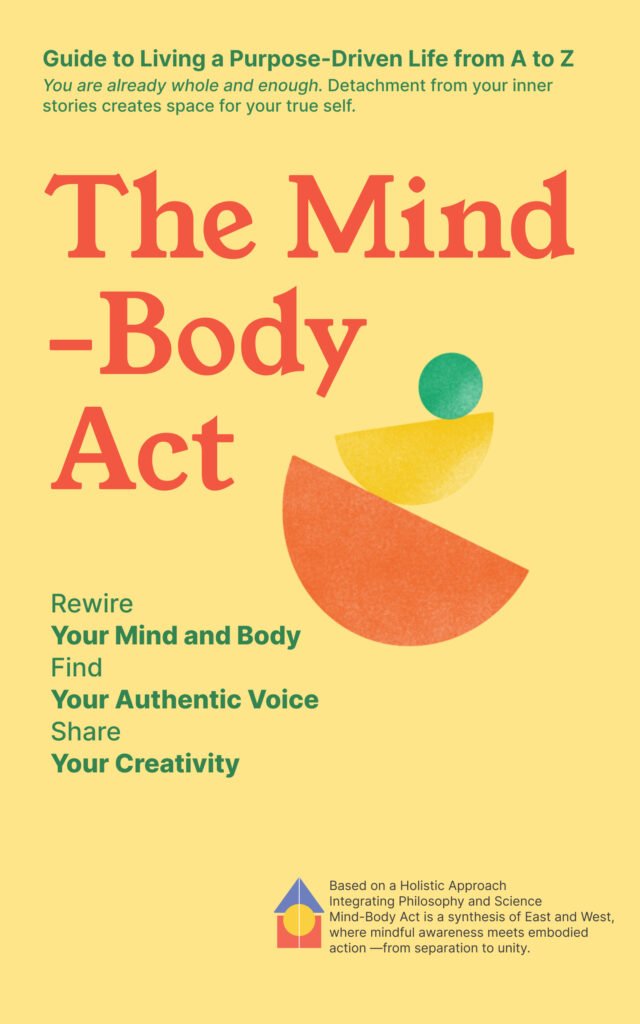
The Mind-Body Act Guide Book invites you to live from that shift. It offers “the mentorship I wish I had,” guiding you from the beginning of self-discovery to living with deeper flow and balance. Through simple tools and deeper awareness, you can recognize your patterns, understand your energy, and reconnect with what truly matters.