
Tap into Your True Self. Awaken Your Potential.
The Mind Body Act is a self-help book about living life to the fullest. When you feel stuck, disconnected, or uncertain, this guide leads you back to your center—to a life of presence, authenticity, and creativity.
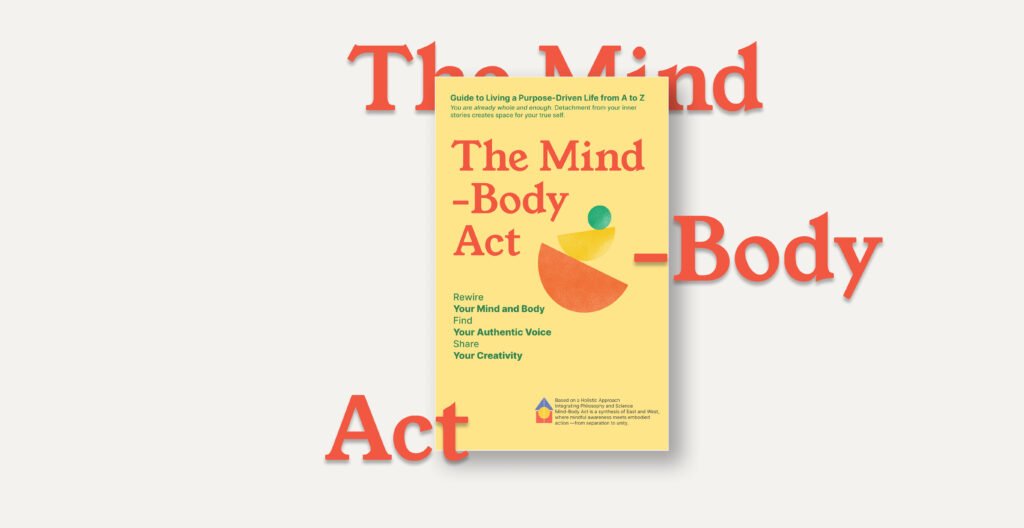
The Mind Body Act: A Guide to Discovering Your Authentic Self
What if you stopped trying to control life and started to flow with it?
Growth doesn’t require fixing who you are. It begins when you meet yourself honestly and move forward with intention.
The goal here isn’t to hand you a fixed system to follow. Instead, this guide offers perspectives, observations, and approaches that may help you navigate your own journey. What resonates or proves useful will depend on your unique circumstances. This is an invitation to explore, not a set of universal answers. The hope is that you find ideas here that support your own process of returning to your genuine self, however that unfolds for you.
The Mind-Body Act offers reflections and practices drawn from personal experience and research. It aims to support anyone interested in self-actualization and living with greater flow, presence, and balance. There are no perfect answers, only opportunities to experiment, reflect, and grow with honesty and self-compassion.
Questions that quietly arise:
- Why do I feel broken, and is something actually wrong with me?
- What happens when I stop trying to fix myself?
- How do I find myself? What does it mean to live with purpose?
This guide answers those questions step by step, blending science with lived experience. Through a deeper understanding of your patterns, your energy, and what truly matters to you, you learn to care for your mind and body in a way that actually feels natural. When you begin to detach from the inner narrative that’s been running in the background, something shifts, suffering loosens, and creativity opens up with the mind-body connection. Life starts to feel less like something you’re managing and more like something you’re genuinely part of.

What is the Mind-Body ACT?
The Mind–Body Act is a way of understanding and living in which the mind and body aren’t treated as separate entities but as a single system that shapes everything you experience. At its core, the idea is simple: you don’t change your life and your perception just by changing your thoughts. Your thoughts don’t really change unless what you feel in your body changes. You change it by changing how your mind (thoughts), body (emotions), and nervous system work together.
- Your thoughts affect your body.
- Your body affects your thoughts.
- Your nervous system quietly shapes how you perceive everything.
If you’ve been asking yourself questions like these, you’re already guided in the right direction:
- How can I build a sustainable mind–body balance?
- How can I connect with my authentic self and live from that place?
- How can I expand my creativity and share it freely, without being held back by what others think
The Mind-Body Act Guide Book
The Mind-Body Act Book is an invitation to come home to yourself. Each page helps you remember what it feels like to be whole, to listen to your body, and to find your own rhythm again. The practices and insights inside don’t just teach you; they walk with you, so you can create a life that feels steady, honest, and true to who you are:
Build daily routines that feel good and nurture real, lasting change one gentle step at a time.ind–Body Act isn’t about becoming someone new. It’s about removing what was never really you, so who you actually are can naturally come forward.
- Feel the connection between your mind and body, not as two separate things, but as one living system.
- Notice the patterns that shape your thoughts and emotions, and understand how they guide your every step.
- Learn how to soothe your nervous system, so you can stop reacting on autopilot and begin choosing your responses with intention.
- Grow your awareness so change isn’t just an idea, but something you feel and live in your body.
- Remember who you are beneath all the roles and expectations, and find your way back to your authentic self.
- Let yourself speak, create, and move more freely because your voice and creativity matter.
Why do I feel like something is wrong with me?

You may sometimes feel like something is wrong, but most of the time that feeling comes from learned ways of seeing, not from who you actually are. We move through life inside patterns we didn’t consciously choose. When you start noticing those patterns, something opens.
You can’t erase the past, but you can change your relationship with it. The same experience can either pull you down or become something you build on. That shift begins when you stop holding onto what no longer serves you and start using what’s already strong in you. Your brain has a power called neuroplasticity.
You have thoughts, emotions, and beliefs, but they aren’t you. When you stop getting pulled into all of them and start observing instead, things begin to shift on their own, without forcing.
A lot of what you think you want is actually covering something you don’t want to feel. That’s why chasing doesn’t really end. The change starts when you let those feelings be there rather than avoid them, while also moving toward what genuinely feels right for you.
We’re not just minds; we live through a body. If your nervous system stays the same, your perception stays the same. What feels like “you” is often a set of repeating patterns, what neuroscience calls the Default Mode Network. At some point, you see it clearly: you’re not your past, but you are the one choosing what comes next. Even if nothing outside changes, your experience can.
Why Your Mind Keeps Pulling You Away from the Present?
It’s common to notice how the mind can quietly pull attention away from the present moment, sometimes making tomorrow feel more urgent than what’s happening right now. This can lead to a sense of postponing real living for a future that hasn’t arrived. There’s a traditional image from Milarepa that illustrates this: chasing thoughts can be like a dog running after a stick, while turning toward the source of those thoughts is more like a lion, which commands a different presence. Many people find themselves following thoughts, worries, or imagined scenarios almost automatically, rarely pausing to consider where these impulses originate.
When looking more closely, it can be surprising to realize that decisions might not always originate in conscious awareness. Research suggests the brain prepares for action milliseconds before it feels like “I decided.” This creates an interesting gap between what’s happening and how it’s experienced, shaping the sense of control. Much of daily life runs on familiar patterns, habits, emotional reactions, and conditioned responses that help the brain conserve energy by reusing established pathways. As a result, many actions unfold automatically, even though they may feel deliberate.
Yet when you step outside these patterns, even a little, something different can happen. Doing something new, pausing before reacting, or simply noticing a thought without immediately following it, may seem subtle but can gently shift the experience. These small moments of awareness can open space for new responses to emerge, and within that space, possibilities can expand.

A New Approach: Seeing Reality Through an Authentic Lens
We begin by stepping out of the old human-centered worldview. Instead of seeing ourselves as separate from life, we begin to recognize ourselves as part of it, constantly interacting with everything around us. This shift moves us from a dualistic perspective, where mind and body, self and world are seen as separate, to a more nondual understanding, where these divisions are no longer experienced as fundamentally real.
Thought isn’t just something that happens inside the brain; it’s a process deeply connected to life as a whole. When you start to see this, connectivity becomes central. You’re no longer observing life from the outside; you are participating in it. This opens up a wider, more integrated view of who you are. From there, we move into where real transformation actually happens.
Rewire Your Mind & Body
Rewiring the mind–body connection means recognizing that your thoughts and your physical state are deeply interconnected. It’s not just about changing how you think; it’s also about paying attention to your body and your nervous system. When you learn to notice and regulate how your body feels, whether you’re tense, relaxed, anxious, or calm, you start to influence your thoughts and perceptions as well.
This process isn’t just about self-control or forcing yourself to think differently. It’s about developing a deeper understanding of yourself. As you become more aware of your patterns, you can respond to life’s challenges with greater emotional intelligence and resilience. In short, rewiring the mind–body connection is about creating real change by working with both your mind and body. Real change goes beyond thinking; it requires engaging both mind and body. Our experience is influenced not just by our thoughts, but also by the state of our bodies and nervous systems at any given moment. This is the essence of the mind–body connection: the mind and body are inseparable, constantly affecting and shaping one another.
Embodied cognition teaches us that how you feel shapes how you think, and how you think shapes how you see the world. Perception is not fixed; it shifts constantly with your nervous system’s state.
This means the challenge isn’t just “out there,” it’s in how your perception is formed. Changing thoughts alone isn’t enough. If your body stays the same, so does your perception.
When you learn to regulate your nervous system, your relationship with yourself changes. You stop forcing and start softening. Instead of trying to control or react to everything, you begin to notice what’s happening in your body and mind, and you can respond more intentionally. This shift isn’t just about self-control; it’s about deeper self-understanding. Over time, this leads to greater emotional intelligence and real resilience. You begin to see the invisible patterns you’ve been living inside, often without even realizing it.
Find Your Authentic Voice: Live with Awareness & Presence
Awareness is the starting point. When you become aware of your conditioned thoughts, ingrained habits, and old defenses, you see how they layer together to form a false self. This structure may try to protect you, but it also becomes a framework that limits you. Much of the time, you’re not moving from your own voice; you’re moving from learned patterns.
That’s where introspection comes in. By observing your inner world, you create space between yourself and your thoughts. This space isn’t about running away or denying what you find; it’s about not being swept away by it.
Here, awareness, acceptance, and surrender work together. When you see what you’ve been trying to control, accept it, and let go of the need to force it, you don’t become passive; you actually act from a clearer, steadier place.
Over time, you realize you are not your thoughts (mind) or your emotions (body). You are the space that observes them. That awareness is what brings you back to your true self.
What Is Authenticity in Life?
Authenticity is about coming home to yourself. It means living in alignment with who you truly are, not just following the roles, expectations, or patterns learned from others. At its core, authenticity is being honest with yourself, acknowledging your feelings, desires, and values, and letting your actions reflect your inner truth, even when that feels uncomfortable or goes against the grain.
Being authentic has nothing to do with perfection or always knowing the right thing to do. It’s about being real with yourself, admitting when you feel lost, uncertain, or vulnerable, and still choosing to show up honestly. When you allow yourself to be seen as you are, even with flaws or doubts, you open the door to deeper connection and greater meaning in your life. This is what builds genuine relationships, fulfillment, and lasting change.
Share Your Creativity: Express What’s Already Within You
As your relationship with yourself changes, so does the way you express yourself. Creativity starts when you allow what’s inside you to take shape and be shared with the world. When you let go of outcomes and stay present with the process, creativity flows more freely. It contracts when you try to control it, and expands when you allow it. Eventually, creating stops feeling like a chore and becomes something that moves naturally through you. When your creativity is aligned with who you are, it’s sustainable.
This guide brings together about 15 years of experience and scientific research. At its core, the idea is simple: change doesn’t start by pushing harder; it starts with understanding yourself.
No matter where you are on your journey, real transformation isn’t a one-time event—it’s an ongoing practice of meeting yourself honestly, again and again. Progress isn’t always a straight line, and setbacks are part of the process. The more you return to awareness, compassion, and curiosity, the more life opens up from the inside out. Keep coming back to what feels true for you. That’s where your authentic self is found.
FAQ
What makes The Mind‑Body Act different from other self-help books?
The Mind-Body Act integrates modern neuroscience, somatic psychology, and holistic philosophy with Eastern wisdom and intuitive practices, guiding you toward a balanced, grounded path of self-discovery. Along the way, you’ll gently shed old patterns—like peeling the layers of an onion—to realize that your True Self has never been lost, only waiting to unfold naturally. This journey isn’t about fixing or becoming better; it’s about releasing what’s not you, so your innate wholeness can flow freely into expression.
Who is this book for? Does The Mind‑Body Act book draw from science or spirituality?
Anyone feeling overwhelmed, stagnant, or disconnected from their body, creativity, or deeper purpose. Whether you’re new to personal growth or already on the path, the book offers practical steps and compassionate support that meet you exactly where you are. The Mind-Body Act blends modern neuroscience, somatic psychology, and holistic philosophy with Eastern wisdom and intuitive practices, guiding you toward a grounded and balanced path of self-discovery.
What is the mind–body problem?
The mind–body problem asks: Are mind and body separate, or one? Descartes argued for a split (dualism); Spinoza and others held that mind and body are two aspects of the same substance (monism). Non-dual traditions say separation never existed; habit creates it.
This debate shapes how we understand illness, health, relationships, and even our sense of self. When you feel anxious, your stomach tightens. Music makes your body move. A placebo eases your pain. These aren’t abstract puzzles; they reveal the real mystery of the mind–body connection.
What is the mind‑body connection?
Your mind is already embodied. And a person is truly the sum of their habits. The mind-body connection is the powerful, two-way relationship between your mental and emotional state and your physical health. Your thoughts, feelings, and beliefs don’t just influence your body; they actively shape how it functions. Likewise, your physical condition can directly affect your mood, clarity, and emotional well-being. This connection isn’t just a theory; it’s a well-documented, science-backed reality with real, measurable effects on health and healing.
Why is the mind-body connection important?
If you want to understand Who You Are, the mind-body connection is key. Your thoughts, emotions, and physical health constantly influence one another. When you’re stressed, your body often reacts with tension or fatigue. Likewise, physical discomfort can affect your mood and focus.
Understanding and strengthening this connection helps you manage stress, regulate emotions, and make healthier choices. It can improve sleep, boost energy, and support long-term healing. By tuning in to your body’s signals through breath, movement, and awareness, you develop greater resilience, presence, and clarity in daily life.
How can I strengthen the mind‑body connection?
You can strengthen your mind-body connection through daily mindful practices like breathwork, meditation, and movement. Try yoga, mindful walking, or body scan meditation to tune into your inner signals. Regular exercise, quality sleep, and mindful eating also help you stay balanced and aware. Even simple habits like journaling, spending time in nature, or expressing gratitude deepen your connection. If needed, seeking support from a therapist can also guide your growth.
How can I live an authentic life?
Live authentically by aligning your choices, values, and expression with your True Self—the part of you beneath fear, conditioning, and societal roles. Show up with yourself and the world as you are, without performing or proving anything.
To live authentically:
Drop false identities: Let go of roles, masks, and behaviors that no longer reflect who you choose to become.
Reconnect with your True Self: Tune into what feels true for you—not what others expect or demand from you.
Choose what aligns: Let your inner clarity and values guide your decisions—not pressure or habit.
Feel fully: Honor your emotions to stay honest and rooted in your experience.
Live from presence: Ground yourself in the moment and let your True Self lead the way.
Self-Actualization: Treat self-actualization as a lifelong, holistic practice—live with awareness, resilience, and purpose, instead of chasing a final destination.
How can you explain the idea of “no separation” from both a scientific and a spiritual perspective?
Scientific Explanation: No Separation (Embodied Cognition + Neuroscience)
Science shows your mind and body constantly interact. Your thoughts shape your body, and your body shapes your thoughts.
When you feel anxious, your muscles tense, your heart races, and your breathing shortens. When you stand tall, breathe slowly, or smile, you shift your nervous system and feel calmer or more focused. Your brain never works alone; it relies on signals from your body and environment. Your body does more than carry you—it shapes how you think, feel, and make decisions. You won’t find a sharp line between “mind” and “body.” They form one interconnected system. Modern science rejects the idea that the mind lives only in the brain. Consciousness emerges through your whole body as you interact with the world.